Toy Story 2
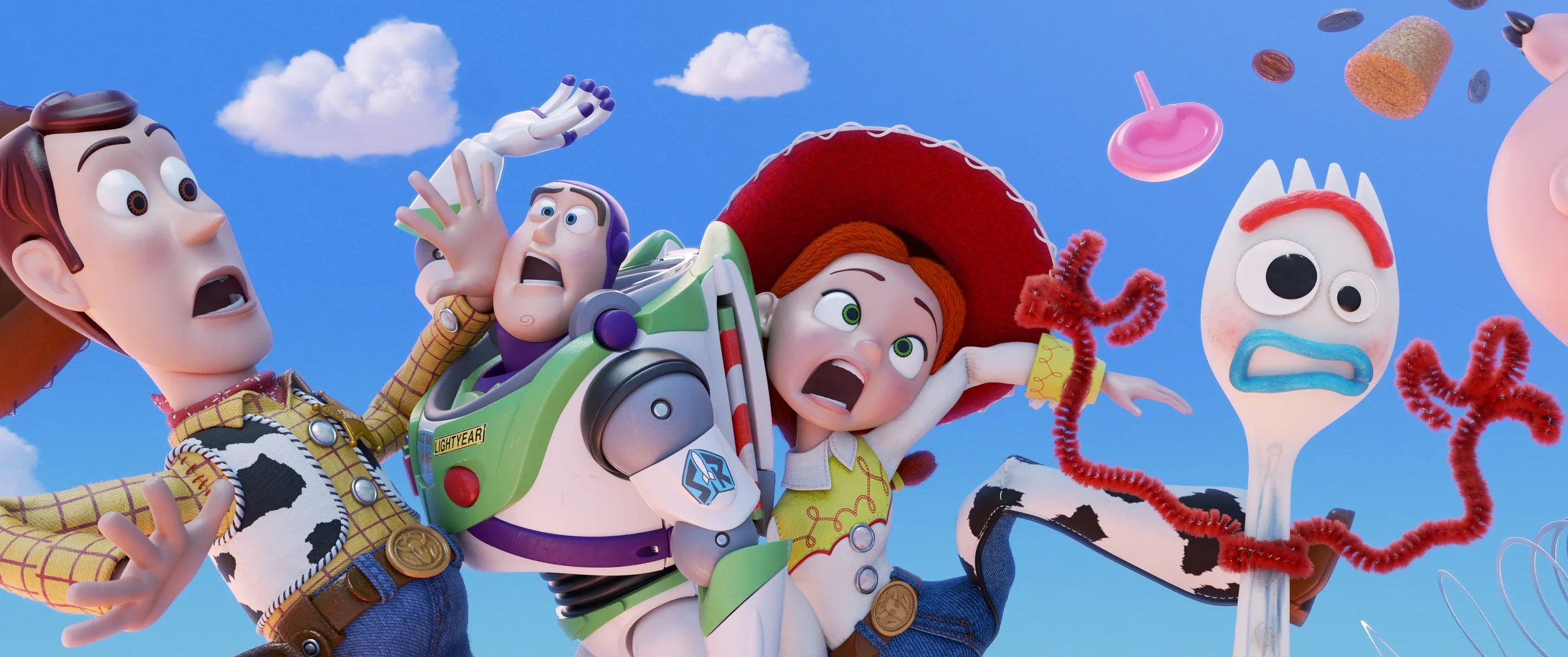
Woody's a cowboy doll and a good soul. When his second kid owner, Bonnie, plays with all of her other toys except him, he doesn’t grow angry or resentful; he accepts it. And after that playtime, when Bonnie is feeling sad about having to go to kindergarten orientation, he jumps into her backpack to help- even though the other toys tell him not to. With other toys, Woody acts like a coach- getting them ready and comfortable for playtime. Later in the film, the doll character Gabby Gabby steals Woody’s voice box to fix hers so she can finally get played with by this one specific girl. However, this fails, and a sadly discouraged Gabby offers the voice box back, but Woody lets her keep it and tries to make her feel better, despite the villainy she's caused him before. Woody does get tired, upset, and frustrated sometimes, but he is always a good soul.
As exemplified by the way Woody helps other toys, it shows how much importance the toys in Toy Story place on being played with by kids. Toy Story 4 is about the value toys have for themselves, independent of their kid. Unlike the previous three Toy Story movies, which opened with scenes relating to kids playing with their toys, the fourth film opens with a scene of the toys rescuing another toy. This is because the first three movies show that toys have meaning when attached to their kids, while the fourth movie shows that toys have meaning for themselves.
Toy Story 4 challenges Woody's worldview, as he changes his thoughts on the purpose of being a toy. In the original Toy Story, Woody learns that it doesn't matter if he's his kid's favorite toy; his purpose is to be there for his kid. Woody also teaches action figure Buzz, who falsely believes he is a Space Ranger, that he matters as a toy because his kid loves him as a toy, not as a Space Ranger. In Toy Story 2, Woody realizes he's disposable, and his kid will throw him away if he breaks. Woody also realizes his kid will grow up and won't play with him anymore. Buzz reminds Woody of the lesson he taught him in the previous film: that a toy's purpose is to be played with by a toy. Woody teaches Jessie that being played with is worth it, even though they both know their kids will grow up and won’t play with them anymore. Set years after the second film, Toy Story 3 has Woody's kid, Andy, grown up and no longer playing with toys. Now, Woody still believes he and the other toys must follow Andy’s wishes and be placed in the attic. The other toys clash with Woody over this once they discover they can go to a daycare where they’ll have the chance to be played with again. Woody, seeing the other toys as unloyal and selfish, heads back to Andy’s house. He believes his loyalties are to his kid specifically, not kids in general, and decides to go back to Andy’s, believing it's best for him and the other kids to follow Andy’s wishes, as their loyalties lie. Later in the film, Woody changes his position, realizing that a toy's purpose is to be played with by a kid, not only to be loyal to their kid, and that Andy doesn't need him or the other toys anymore, so it's okay for them to move on, to continue their purpose as toys.
Toy Story 4 explores how Woody changes his view of a toy's purpose without undermining the previous films’s themes. Toy Story 4’s opening flashback, set between the second and third film, has Woody trying to rescue fellow toy Bo Peep from a donation box. When he reaches Bo, Bo tells Woody that it’s time for her to move on to the next kid. She offers him to join her, and he briefly considers it, before remembering that Andy still needs him. They have to separate because of their purpose as toys related to their kids: Woody must be there for his kid, who, at the time of the flashback, still needs him, and Bo must move on to the next kid, as her kid no longer needs her. Their purpose tied to their kids keeps them from doing something else meaningful for themselves: pursuing a life together. In the present, Woody isn't being played with by his second kid owner, Bonnie, and is lacking purpose. Bonnie creates Forky – an arts & crafts spork who comes to life as a toy and immediately becomes her new favorite toy. Forky sees himself as trash, not a toy, and keeps trying to jump in a garbage can. However, Woody always stops him, making sure he is there for Bonnie. When Bonnie and her parents go on an RV road trip, Forky decides to jump out of the vehicle, and Woody jumps out too to get him back. On his and Forky’s walk back to the RV, Forky asks Woody why he has to be a toy. Woody tells him it's because he's a toy and how lucky he is to be one. The conversation shifts as Woody reminisces with Forky about Andy and how great it was. Toward the end, Woody starts talking sadly, saying that he had a good time with Andy, but now that Andy's gone, he feels useless and without purpose. Forky tells Woody they're both trash. This is because Forky sees trash as comforting and makes him feel like he's gonna be okay. Woody then tells Forky that the way he feels about trash is the way Bonnie feels about him. Forky now realizes that Bonnie needs him.
The Toy Story movies are a brilliant narrative. They utilize the concept of talking toys to explore rich themes of life and purpose. But the toy part isn’t an allegory, as the themes are specific to being a toy, and couldn’t be told if the characters weren’t toys. A toy's purpose doesn't directly correlate with the purpose of real children, real parents, or other roles. It does have likenesses to both, but the themes are unique to toys. Just because a toy’s purpose is similar to children's and parents’ doesn’t make it an allegory. It’s like how being a pet owner and being a parent to human children in the real world share similarities, but they aren’t allegories for each other. Toy Story 4 continues the themes from previous films in the series, while also challenging them. The first three films conclude that a toy's purpose is to be played with by a kid. Toy Story 3 separates loyalty and purpose while exploring its themes, but still upholds the idea that a toy's purpose is to be played with by a child. Toy Story 4 challenges the idea that has been the point of the narrative, by showing and concluding with the point that toys can have an independent purpose beyond being played with by kids. Woody helps Forky embrace his purpose as a toy, showing that he has a purpose not only to be played with by kids, but also to help other toys realize their own purpose. He makes Gabby Gabby realize that she should try to find other kids rather than focusing on only one.
This film doesn't nullify the themes of the previous films. In the original Toy Story, Woody tells Buzz that just because he's not a space ranger and is a toy, it doesn't mean he's invaluable, because Andy loves him not for being a space ranger, but for being a toy. Woody learns to put aside his jealousy that Buzz isn't Andy's favorite toy, and still be there for Andy. In Toy Story 2, Woody begins to realize that Andy's growing up, and Woody won't be there for him.
